
In the summer of 1898, a wagon wheel broke on a muddy road in northern New Mexico — and American art was never quite the same.
Ernest L. Blumenschein, then 24, had set out by covered wagon with fellow East Coast painter Bert Phillips when the wheel gave way near Taos. After a coin toss, Blumenschein rode ahead on horseback to find a blacksmith. Alone in the New Mexico landscape, something shifted. “No artist had ever recorded the New Mexico I was now seeing,” he later wrote. “I was receiving the first great unforgettable inspiration of my life.”
That moment launched one of the most remarkable careers in American painting. Blumenschein went on to co-found the Taos Society of Artists, earn acclaim across two continents, and eventually settle permanently in the high desert he had stumbled into by accident. As America marks its 250th anniversary this year — a moment for looking back at the artists who shaped how this country sees itself — Blumenschein stands as one of the most essential figures in the story of Western American art: a painter who found his subject by accident and spent the rest of his life doing justice to it.
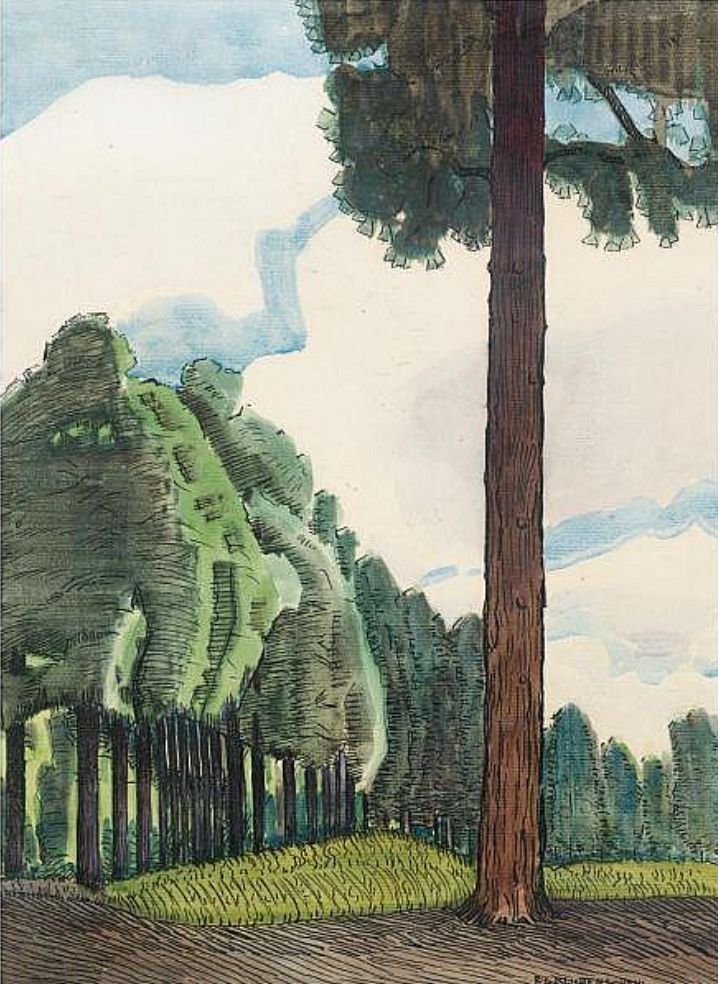
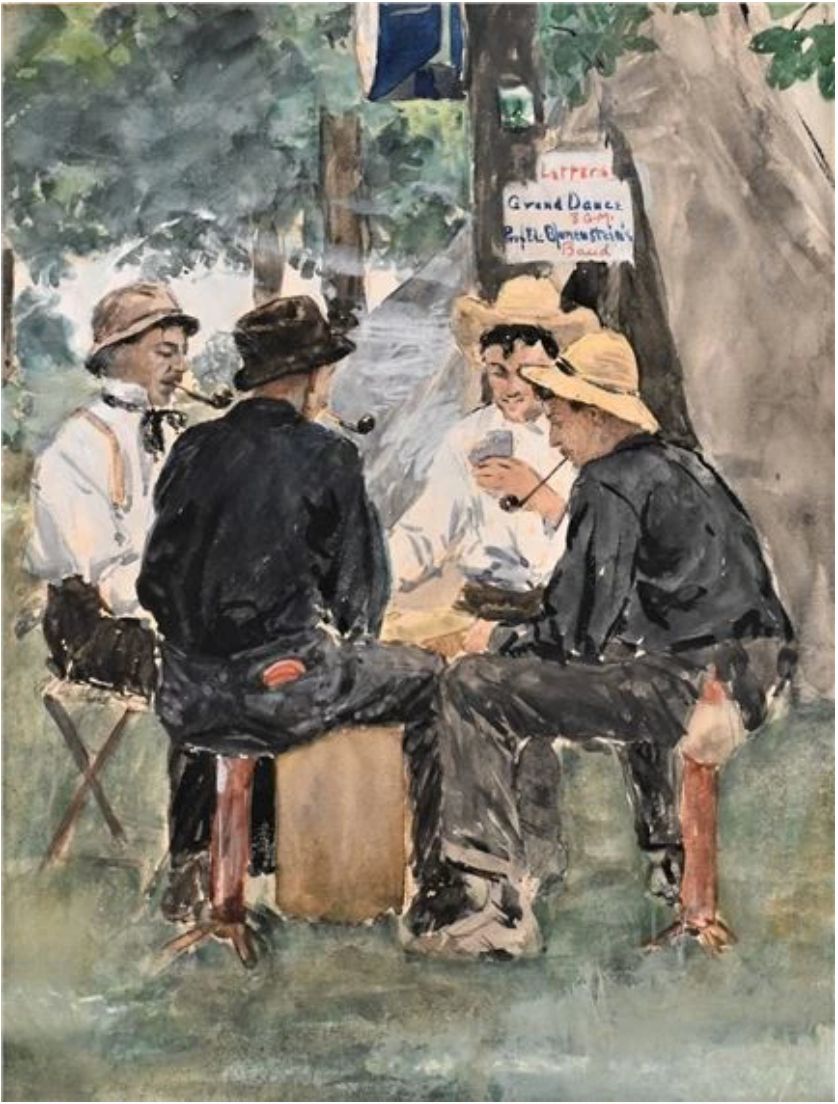
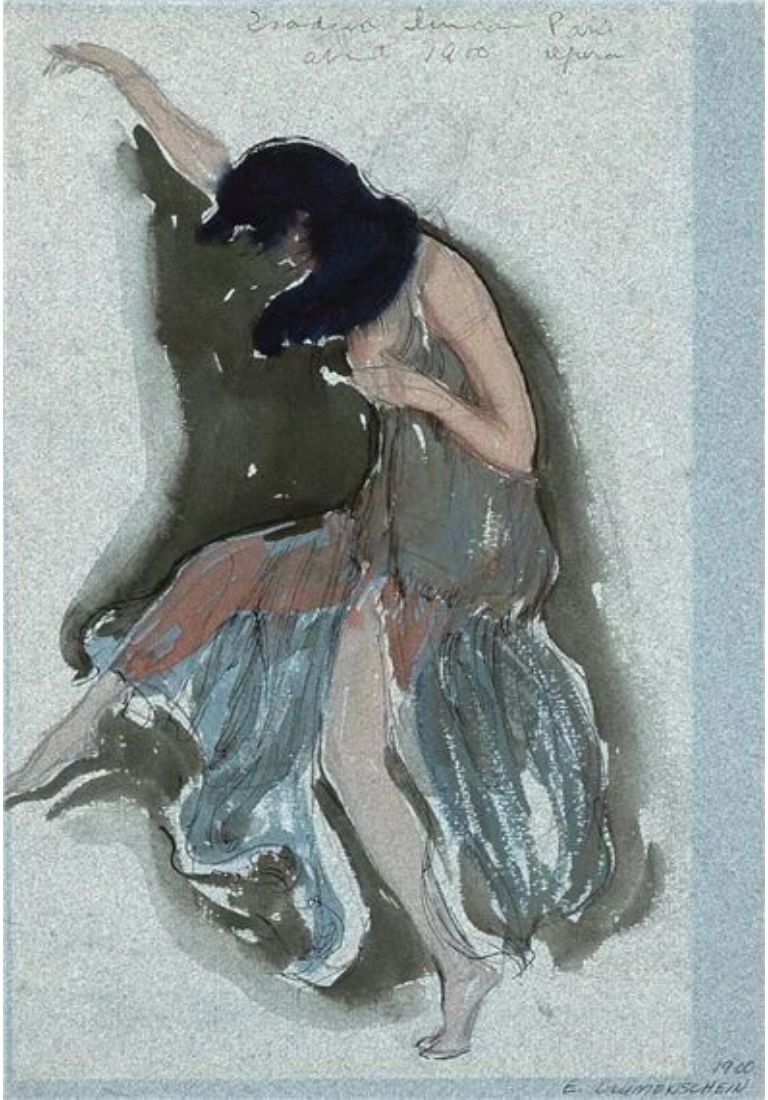
What is less widely known is that watercolor was central to that pursuit from the very beginning. Blumenschein had trained at the Art Students League in New York and the Académie Julian in Paris, where he developed the technical fluency that would serve him across multiple mediums. But it was watercolor — portable, immediate, ideally suited to the demands of painting in the field — that he returned to again and again as a tool for direct observation. The medium allowed him to work quickly in the shifting New Mexico light, capturing the transient effects of color and atmosphere that a slower, more laborious process in oil could not. Many of his most luminous landscape studies began as watercolor sketches made on location, the medium’s transparency lending itself naturally to the particular quality of light in the high desert.
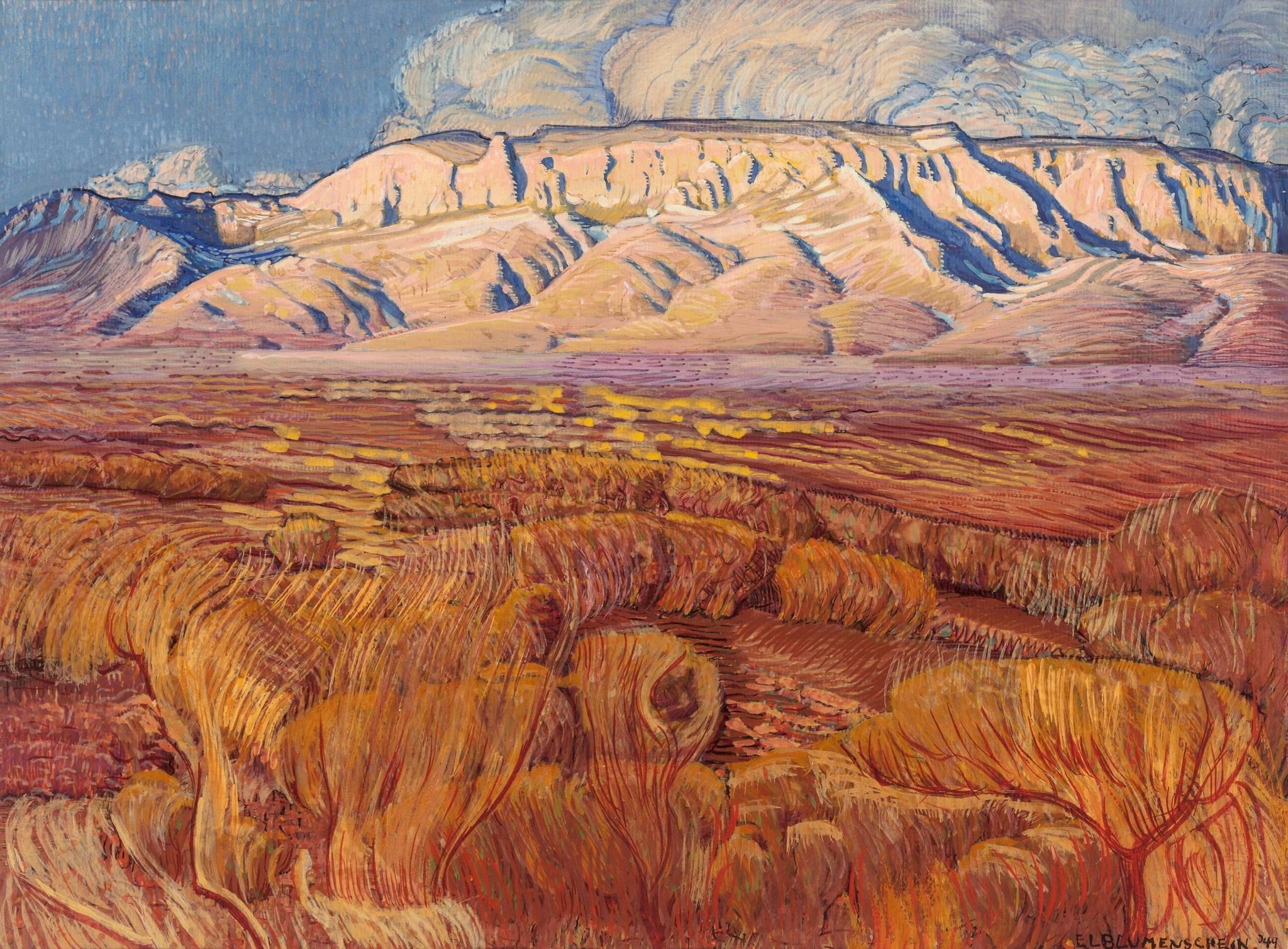
By the 1940s, having relocated to Albuquerque to escape Taos’s harsh winters, Blumenschein turned his attention to pure landscape — specifically the Sandia Mountains surrounding his new home. The range takes its name from the Spanish word for watermelon, a reference to the mountains’ extraordinary pink glow in certain light. It is the kind of subject that rewards exactly what watercolor does best: the layering of transparent washes to build luminosity from within, color modifying color, light held in the whiteness of the paper beneath.
Sandia Mountains captures that luminosity with characteristic intelligence. Where his earlier oils of the same subject relied on structured, modeled brushwork, this late work is fluid and expressive — the weave of sagebrush in the foreground echoing the loose movement of clouds above, fiery reds and yellows set against the cool geometry of the mountains behind. The painting has the quality of something felt as much as seen — the record of a painter who had spent decades looking at the same landscape and had arrived, finally, at a way of rendering it that trusted the medium to carry the emotion without forcing it.
That trust — in the medium, in direct observation, in the power of a single well-chosen view — is Blumenschein’s most enduring lesson for painters today. He found his subject by accident, on a muddy road in 1898. He spent the next half century learning to see it clearly. Blumenschein is one of a remarkable group of American painters we’re celebrating this year as part of our America 250 series in PleinAir Magazine — artists who found their subjects in the landscapes of this country and spent their lives doing justice to them.