
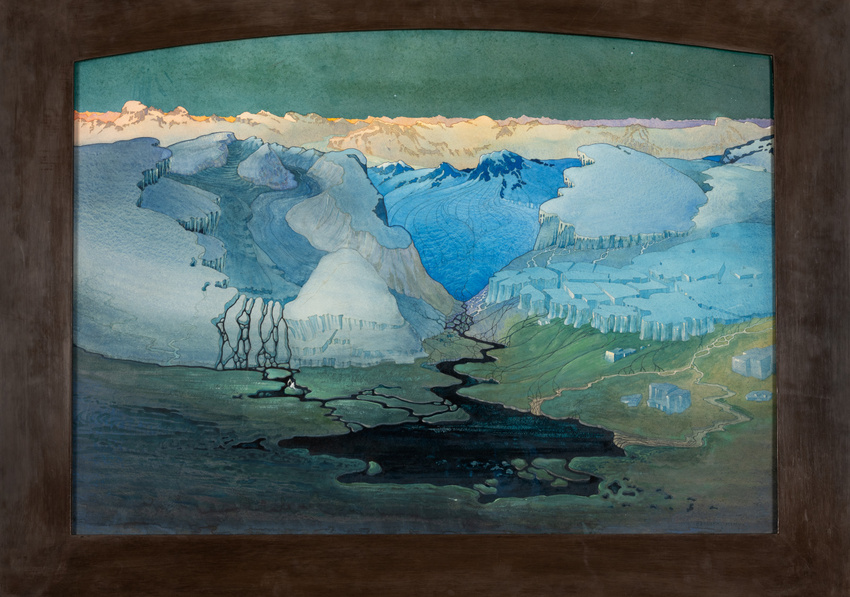
Pax
1905, watercolor, gouache, and gum arabic on paper mounted on panel, 20 1/2 x 28 1/2 in.
© Musée d’Orsay, dist. RMN-Grand Palais / Sophie Crépy
In the late 19th century, artists across Scandinavia and the Netherlands turned inward and northward, seeking meaning not in grand historical spectacle but in atmosphere, memory, and the poetry of everyday life. Nowhere is this more evident than in the rise of Symbolist Nordic landscape drawing — a movement shaped by long winters, hushed forests, and an almost mystical engagement with nature.
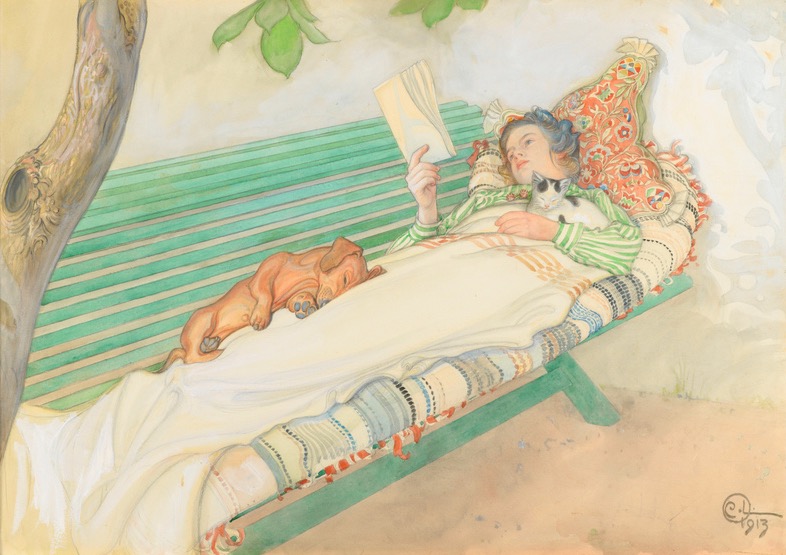
Jeune femme allongée sur un banc
date unkown, black ink; gouache and graphite pencil, 20 1/4 x 28 1/2 in.
© RMN-Grand Palais (Musée d’Orsay) / Tony Querrec
Unlike the sun-drenched optimism of French Impressionism, Symbolist landscapes from the North often lean toward twilight. Forest edges dissolve into shadow; shorelines feel suspended between earth and sky. These works are less about topography than psychology. Nature becomes a mirror of the inner life — quiet, searching, and sometimes melancholic. The spareness of drawing, with its emphasis on line and tonal restraint, heightens that sense of introspection.
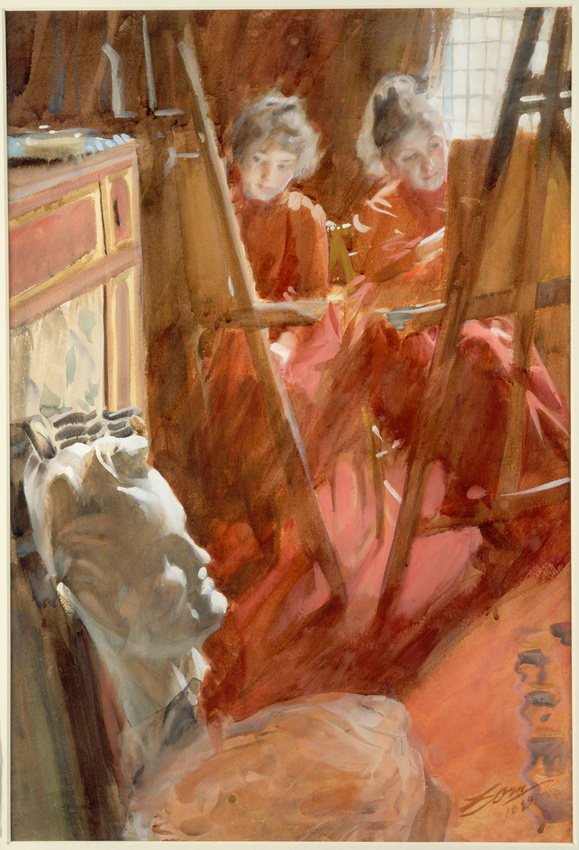
Les Demoiselles Schwartz dessinant
1889, gouache and black chalk on cardboard, 37 3/4 x 26 in. © RMN-Grand Palais (Musée d’Orsay) / Jean-Gilles Berizzi
Against this contemplative vision stand artists who found equal depth in domestic space. Carl Larsson transformed scenes of home and family into icons of Swedish identity. His interiors — sunlit rooms, children absorbed in small tasks, the ordered beauty of handcrafted furnishings — offered an ideal of harmony rooted in daily life. Meanwhile, Danish painter Peder Severin Krøyer, associated with the Skagen artists’ colony, brought extraordinary sensitivity to light, even in drawing. His scenes of companionship and quiet leisure suggest that modernity could be intimate rather than industrial.
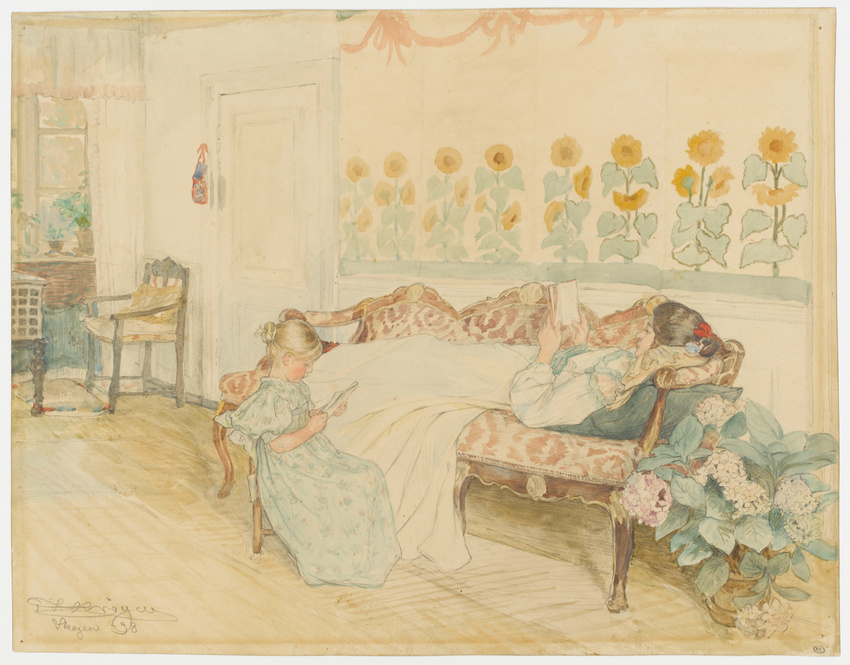
Scène d’intérieur
1898, watercolor and black pencil, 13 x 17 1/2 in.
© RMN-Grand Palais (Musée d’Orsay) / Thierry Le Mage
Other artists, long overlooked, deepen this narrative. The work of Carl Forsberg reveals a searching engagement with landscape that bridges realism and symbolism. His rediscovery underscores how much of Northern Europe’s artistic wealth has remained in shadow.
Together, these drawings — by celebrated names and rediscovered talents alike — form the core of Northern Light: Scandinavian and Dutch Drawings from the Musée d’Orsay, on view at the Musée d’Orsay through May 10, 2026.