
Brushes at the Front: Watercolorists Who Painted War

-advertisement-
American Watercolor Weekly is not affiliated with American Watercolor Society

Watercolor travels light and dries fast, which makes it a natural companion for people at the front. This Veterans Day, we look at artists who recorded war firsthand, from the Civil War to Somalia.
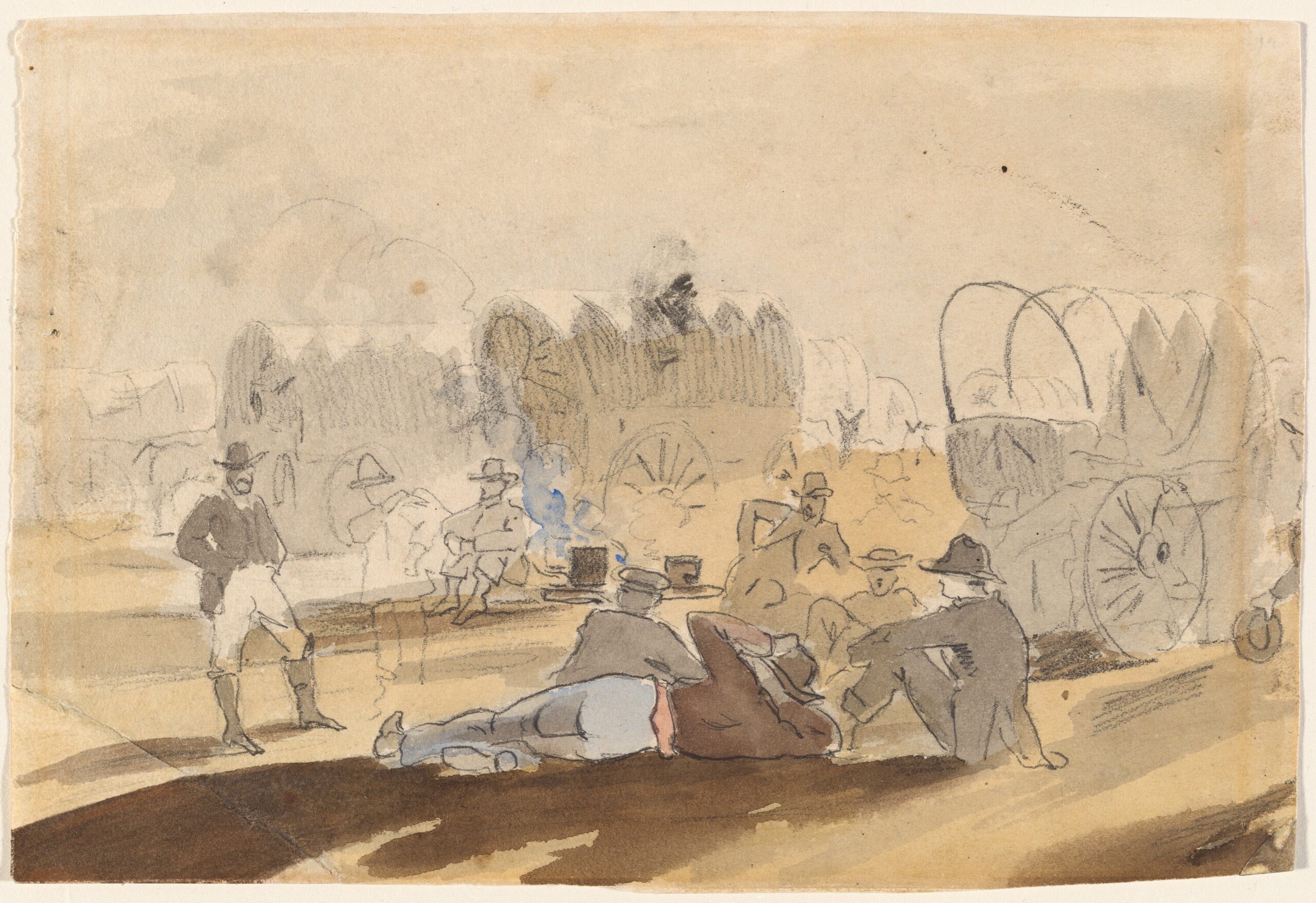
“Caravan with Covered Wagons Resting [recto],” Winslow Homer, 1861, graphite with watercolor on wove paper, National Gallery of Art, Gift of Dr. Edmund Louis Gray Zalinski, II
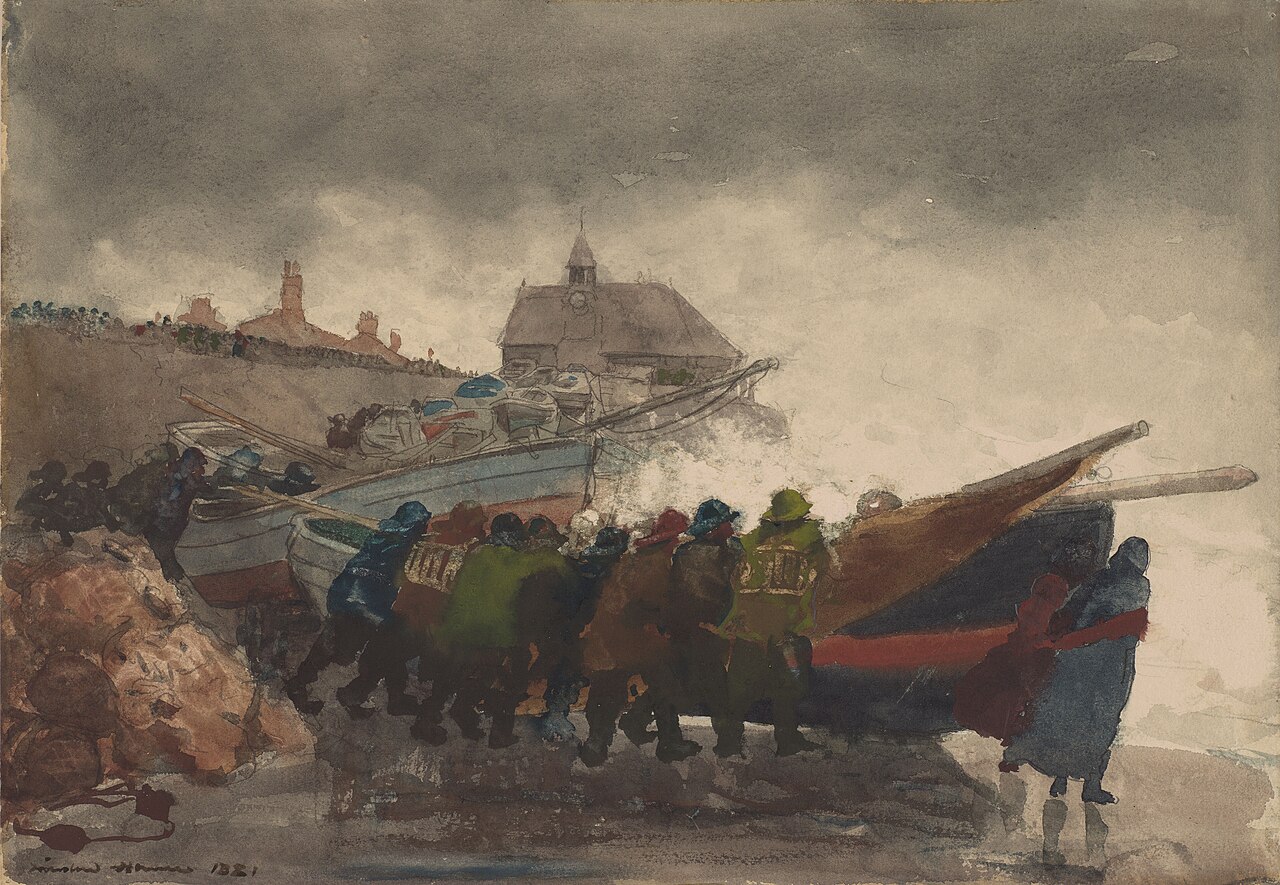
Winslow Homer is the place to start. Long before he became America’s great watercolorist, Homer was a young illustrator working for Harper’s Weekly. In 1861 he made the first of three trips to the front to sketch the Civil War. Those images reached the public as magazine illustrations, and the oils came later. Homer’s war pictures weren’t watercolors, but scholars, including the curators behind Harvard Art Museums’ “Winslow Homer: Eyewitness,” argue that the observer’s role shaped everything that followed, including watercolors such as Watching the Tempest (1881).

“Watching the Tempest,” Winslow Homer, 1881, watercolor over graphite pencil on wove paper, 14 x 20 in., Fogg Muesum

William McIlvaine (1813–1867) worked in watercolor during the same war, during which he served as a member of the New York 5th Regiment of Volunteers. His Union Army scenes of camps, marches, and the Virginia landscape are now held in collections including the Library of Congress and the National Park Service.
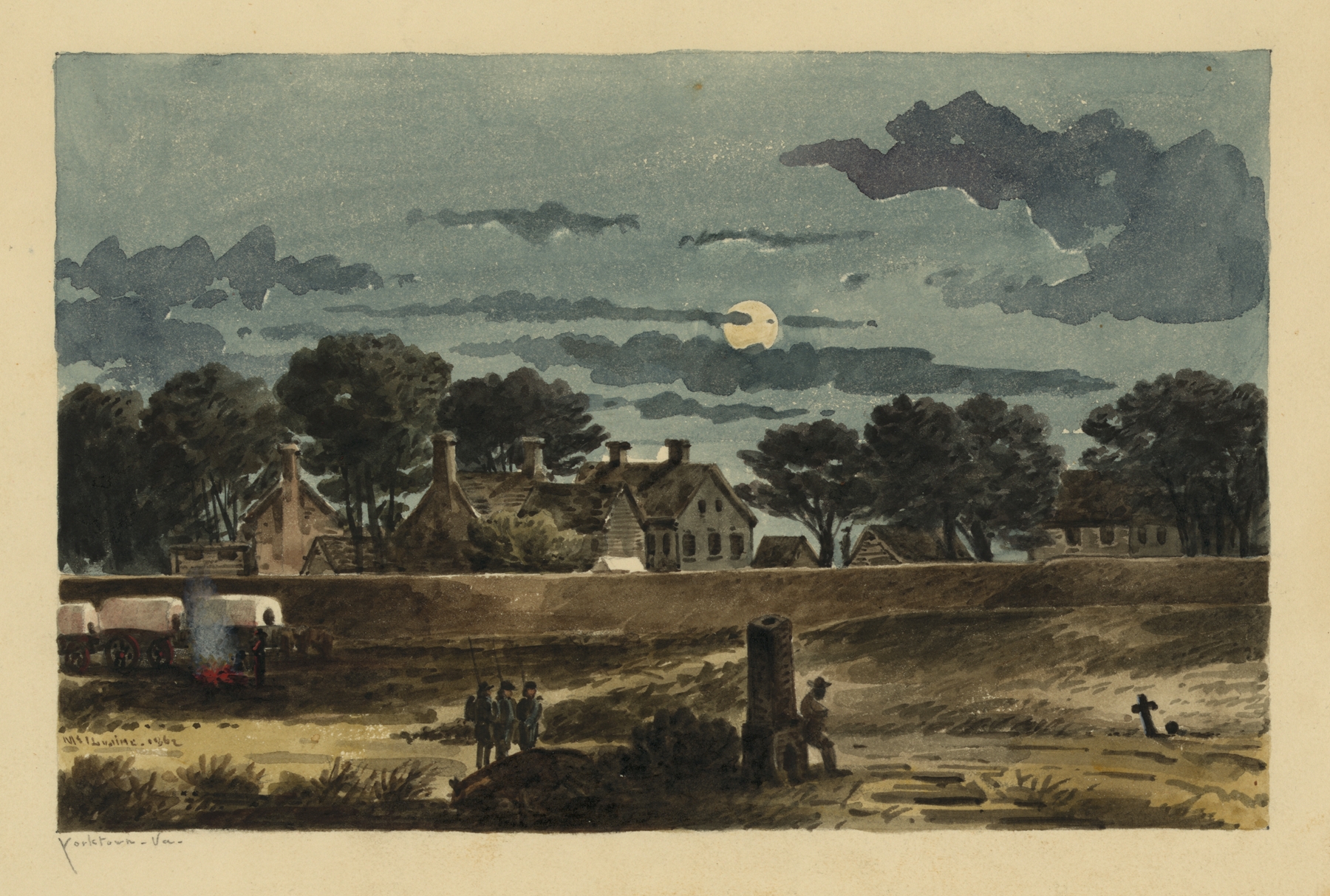
“Yorktown, Va.”, William McIlvaine, 1862, watercolor

World War I produced Claggett Wilson, a soldier-artist whose battlefield watercolors are in the Smithsonian American Art Museum. They capture the shattered ground and chaos of the Western Front.
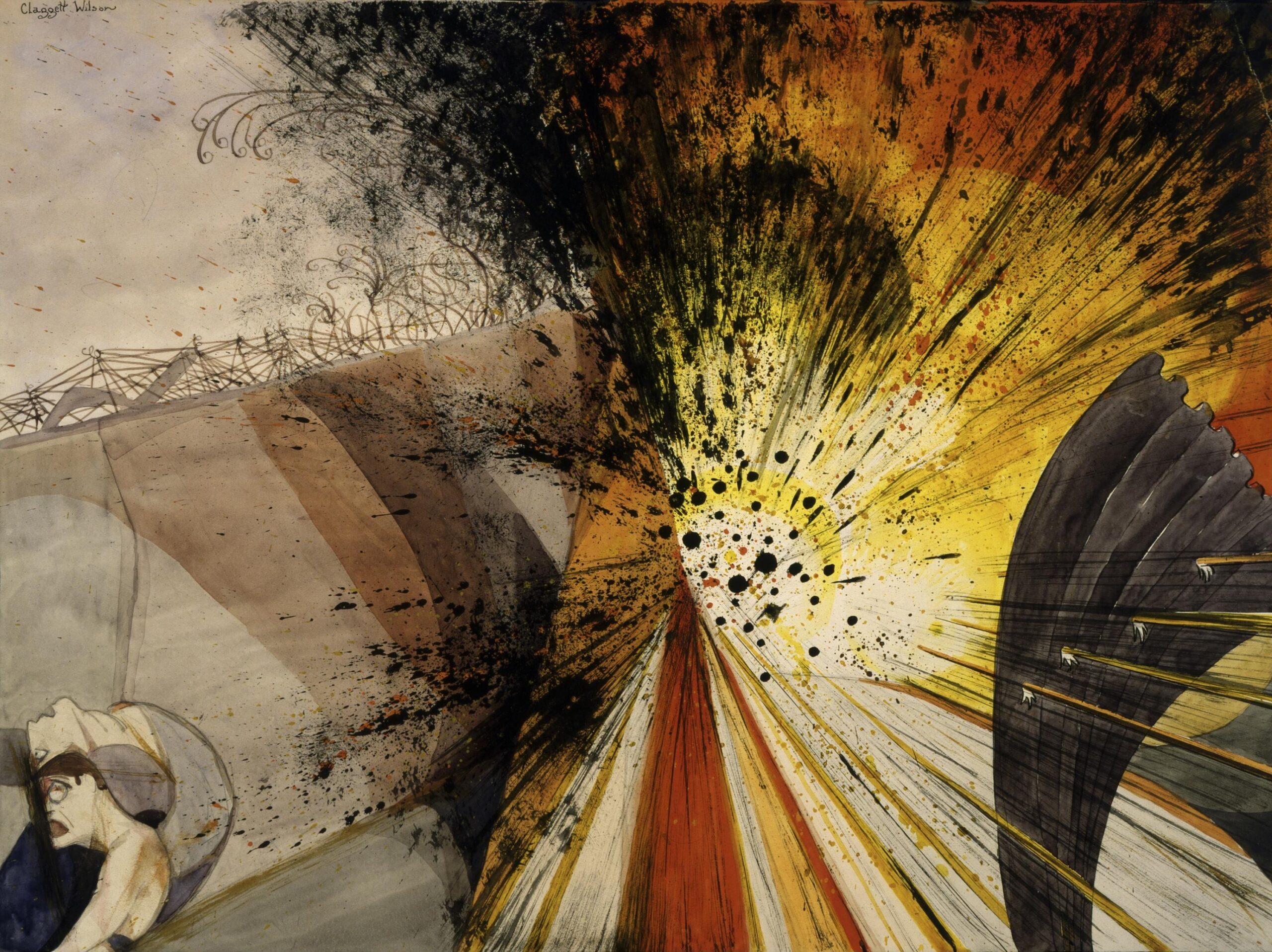
“Flower of Death–The Bursting of a Heavy Shell–Not as It Looks, but as It Feels and Sounds and Smells,” Claggett Wilson, ca. 1919, watercolor and pencil on paperboard, image: 16 1/2 x 22 in. (41.9 x 55.9 cm), Smithsonian American Art Museum, Gift of Alice H. Rossin

In World War II, British official war artist Anthony Gross worked in watercolor and drawing, recording the D-Day landings at Gold Beach, the liberation of Bayeux, and the Allied advance through France. Among his works in the Imperial War Museum are portraits of Americans of the 1st US Infantry Division in the run-up to D-Day. Sitting on the left in this work is Captain Quentin Roosevelt II, nephew of US President Franklin Delano Roosevelt.
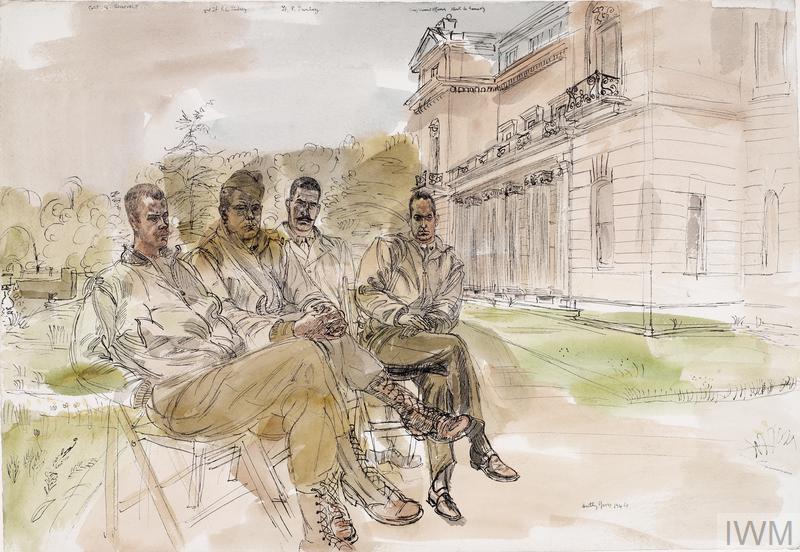
1st United States Infantry Division: Captain Q Roosevelt, a Nephew of President Roosevelt ; Lieutenant R C Lindsay ; Lieutenant
P Dunlay ; Chief Warrant Officer A De Ramery (Art.IWM ART LD 4079) image: the four American officers sit in a row outside in the garden of a large country house, shown to the right. Copyright: © IWM. Original Source: http://www.iwm.org.uk/collections/item/object/11633

Peter Michael Gish (1926–2024) was a veteran himself. A Marine aviator, he served in World War II, Korea and Vietnam. In 1967 he volunteered as a combat artist in Vietnam, flying 24 combat missions to document the war. He later returned to the field for Operation Provide Comfort in northern Iraq and Operation Restore Hope in Somalia.
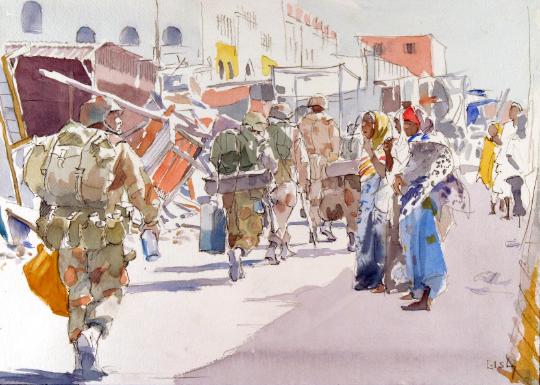
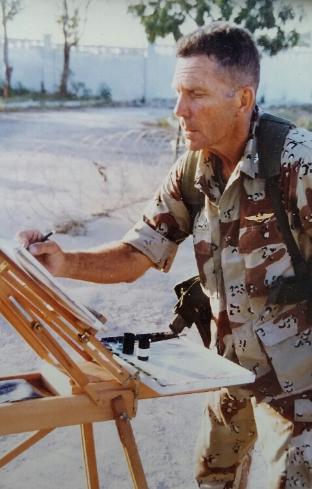
Watercolor sketch during Operation Restore Hope in Somalia by Peter Michael Gish
Peter Michael Gish

These artists painted from very different positions: reporter, officer, official observer, and fellow soldier. Each left a record that photographs can’t fully give us, one shaped by the artist’s own eye and hand.

To every veteran in our community, thank you for your service.

Previous articleWhy Watercolor and Horses Are a Perfect Match
Kelly Kane
PleinAir Magazine and American Watercolor Weekly Editor-in-Chief With more than 20 years experience in art publishing, Kelly Kane has served previously as Editor-in-Chief of Watercolor Artist magazine and Content Director for The Artist’s Magazine, Drawing, Acrylic Artist, and Pastel Journal. She has interviewed many of the preeminent artists of our time and written numerous articles about painting, drawing, art education and art history. She is now the Editor-in-Chief of PleinAir Magazine and the American Watercolor Weekly newsletter. Click here to send her an email.

LEAVE A REPLY

Please enter your comment!
Please enter your name here