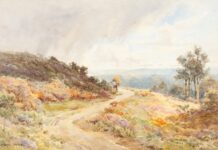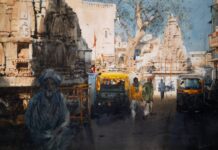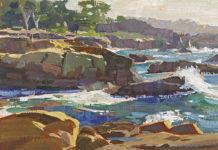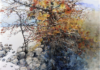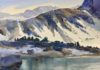


Joseph Zbukvic’s plein air watercolors feel like a glance, not a stare. “What I try to get is an illusion of a fleeting moment,” the Australian painter says. Here are five lessons from the way he works.
1. Work fast, then stop. Zbukvic says, “I can do three or four paintings in a day — sometimes more. I rarely spend more than an hour on one painting. If I fiddle with it more than that, I’m going to kill it.” Leaving things half finished is deliberate. “There’s nothing more boring than a perfect circle, but if you make some dots in a broken circle, your eye will be drawn to it to complete it.”

2. Choose light and layout over a pretty place. “A lot of people think you need to go to a glamorous spot,” he says. “But for me it’s a matter of finding a good layout with interesting shapes and something that’s manageable in watercolor.” He likes painting into the light, and he picks subjects that convert easily into “big strong brushstrokes and quick execution.”
3. Start with “heaven and earth.” Zbukvic begins with a faint wash across the sky and the ground, which he calls “heaven and earth.” Once it dries, he places the major shapes on top, letting the wash show through. A second, stronger layer develops the color, and he saves the darkest darks for last.

4. Plan around your whites. Because there’s no going back in watercolor, he paints around the whites he needs and often puts in the main subject, such as a ship at a dock, last. He compares the process with surgery: “One wrong cut and the patient dies.”
5. Vary your edges. “Two of the most powerful weapons in your arsenal are tone and edges,” he says. “Only then comes color.” He breaks up straight lines with a mix of soft and crisp edges, but goes easy on the soft ones, or the painting can look like “a sopping mess.”

His advice to beginners is blunt: there are no shortcuts. “Becoming an artist takes hard work — lots of experience and lots of brush mileage.”
Ready to put these lessons to work? At Watercolor Live, January 20-22, 2027, you can learn from Joseph Zbukvic and other top watercolor artists, ask your own questions, and paint along from home. Get your ticket →