
They Last Only Days. The Lessons Last Forever.

-advertisement-
American Watercolor Weekly is not affiliated with American Watercolor Society

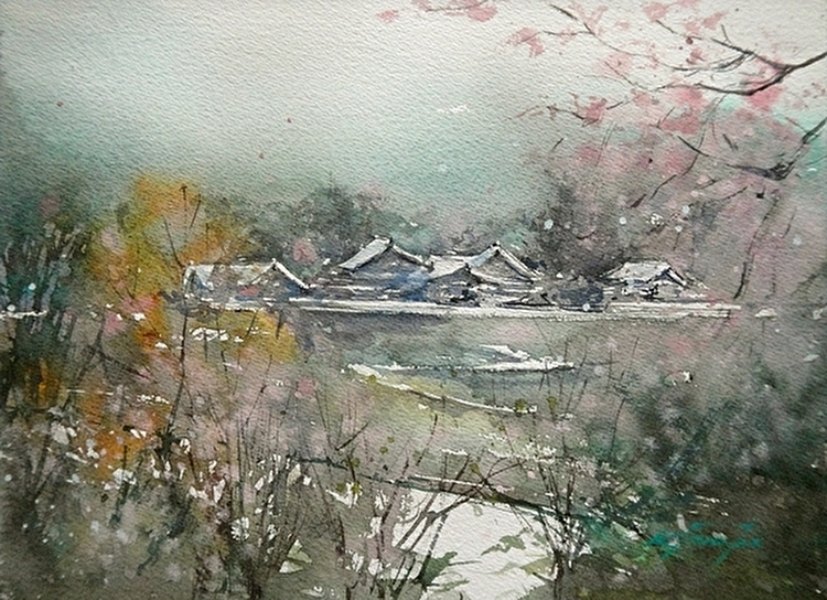
“Sakura III” (2011; watercolor on paper, 8.25 x 11.5 in.) by Keiko Tanabe

Around this time every year, something remarkable happens across Japan. The cherry trees bloom — and for a few fleeting days, the entire country stops to pay attention. The Japanese call it hanami, the ancient tradition of gathering beneath the blossoms to appreciate their transient beauty. Poets have written about it for a thousand years. Painters have chased it for just as long.

For Western watercolorists, the Japanese approach to painting cherry blossoms offers lessons that go far beyond the subject itself. It is, at its core, a philosophy of painting — one built on simplicity, restraint, and a profound respect for what is left out.
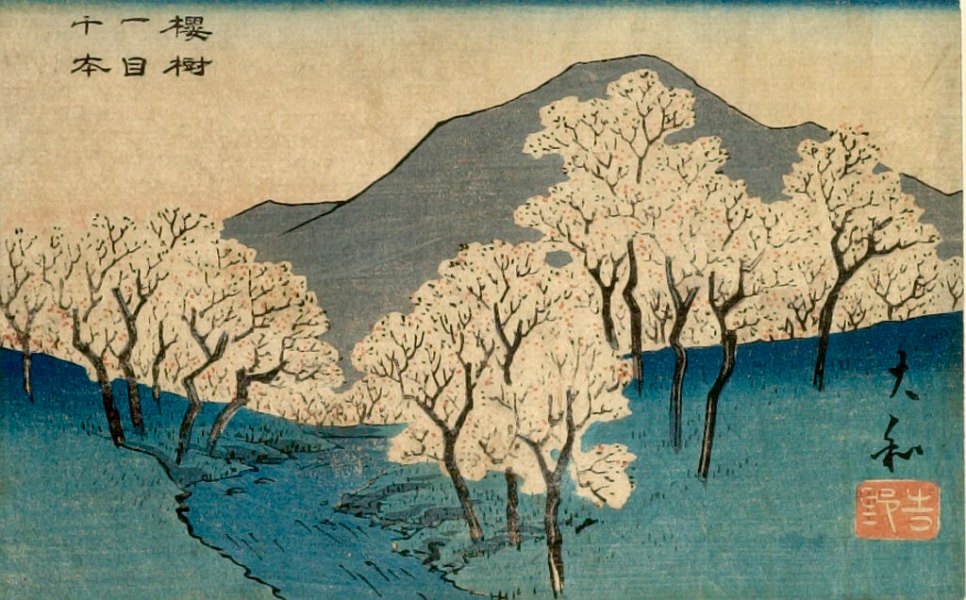
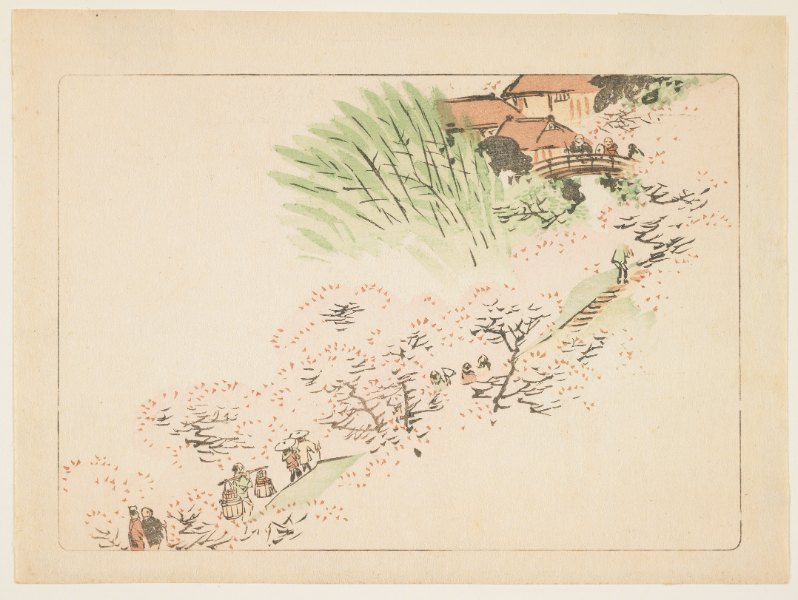
Yamato Province: Yoshino, a Thousand Cherry Trees at One Glance (Yamato, Yoshino, ōju ichimoku senbon), cut from sheet 1 of the series Cutout Pictures of the Provinces (Kunizukushi harimaze zue) by Utagawa Hiroshige II (Shigenobu; Japan, 1826–1869); Harvard Art Museums
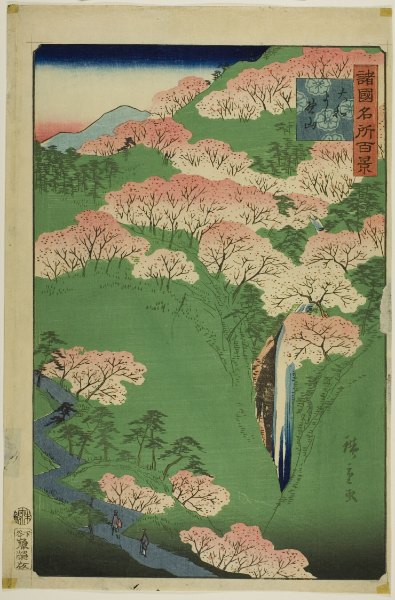
Mount Yoshino, Yamato Province (Yamato Yoshinoyama) from the series “One Hundred Famous Views in the Various Provinces (Shokoku meisho hyakkei)” by Utagawa Hiroshige II (Shigenobu; Japan, 1826–1869); Color woodblock print; The Art Institute of Chicago, Bruce Goff Archive, gift of Shin’enkan

The tradition draws from two deep wells. The first is sumi-e, the Japanese ink painting practice that prizes economy of brushwork above all else. A single, confident stroke. Negative space as a compositional force. The suggestion of a petal rather than its literal depiction. The second is the ukiyo-e woodblock print tradition, whose greatest masters — Hiroshige, Hokusai, and their contemporaries — elevated the cherry blossom to an icon of Japanese visual culture. Their compositions were bold, graphic, and asymmetrical, with blossoms placed against dramatic skies, distant mountains, or the geometry of bridges and temple rooftops.
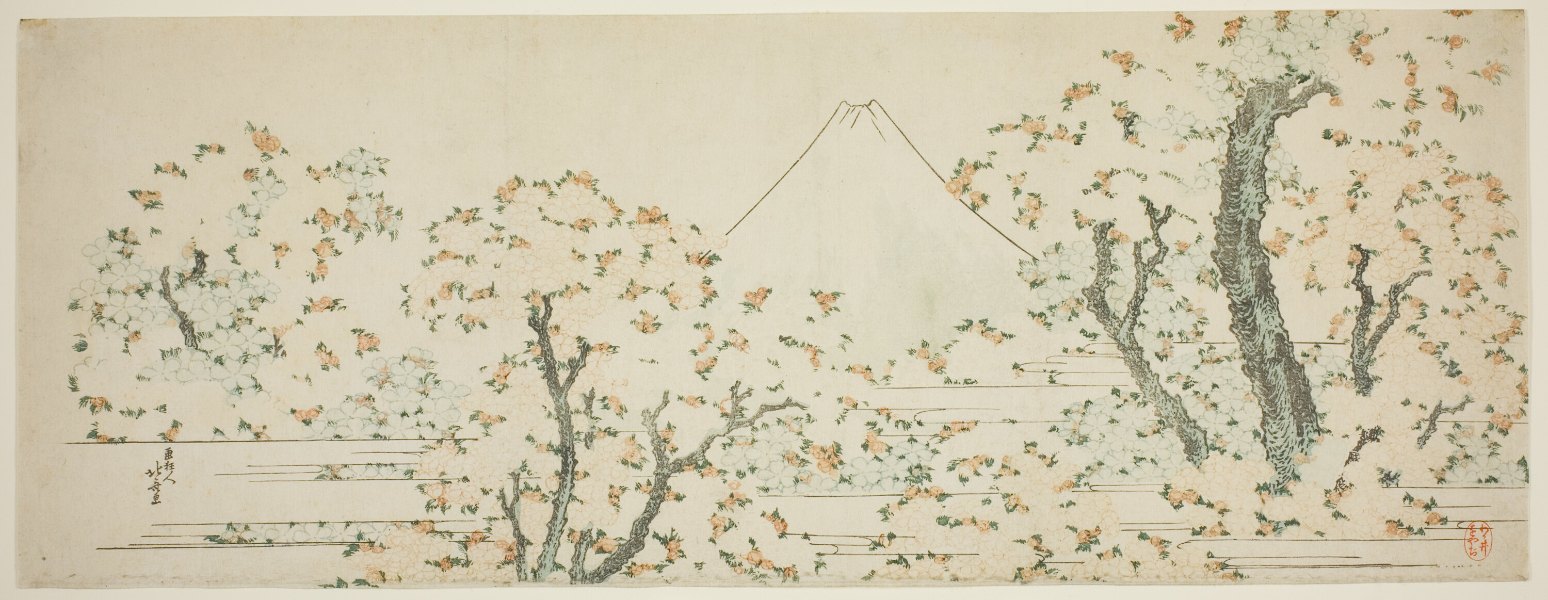
Mount Fuji with Cherry Trees in Bloom (c. 1801/05, color woodblock print; surimono, 7 7/8 × 21 7/8 in.) by Katsushika Hokusai; Art Institute of Chicago, Gift of Helen C. Gunsaulus
Mountain Cherry Blossoms (c. 1877, woodblock print (surimono), ink and color on paper, 6 1/8 x 8 13/16 in.) by Shibata Zeshin; Minneapolis Institute of Art Collection

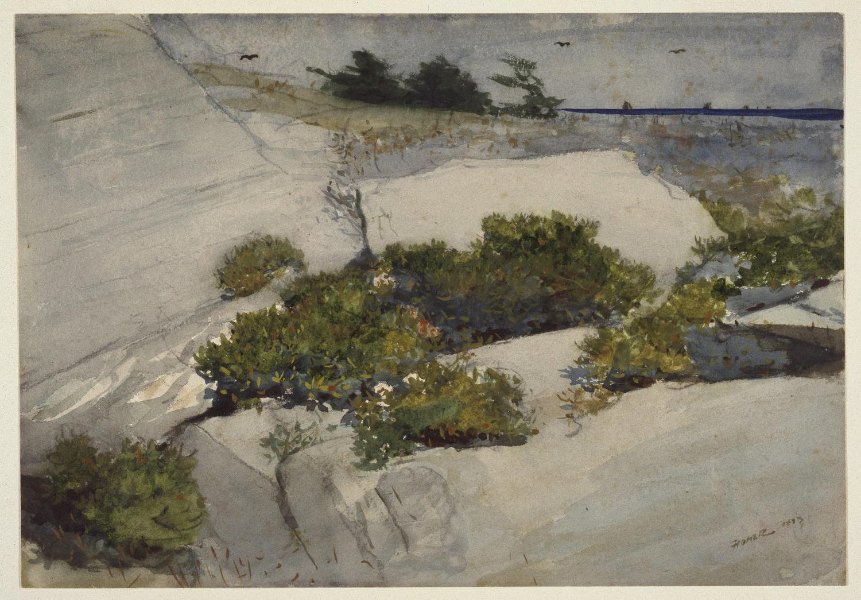
When Japanese watercolor artists began incorporating Western techniques in the late 19th century — part of the broader cultural exchange of the Meiji era — the result was a hybrid approach of extraordinary delicacy. Transparent washes captured the soft pink luminosity of the blossoms. Wet-into-wet passages evoked the hazy, dream-like atmosphere of a grove in full bloom. And the characteristic Japanese sensitivity to negative space gave watercolor compositions a breathing room that Western painters were only beginning to discover — partly, as it happens, because of Japan’s own influence on the French Impressionists during the same period.
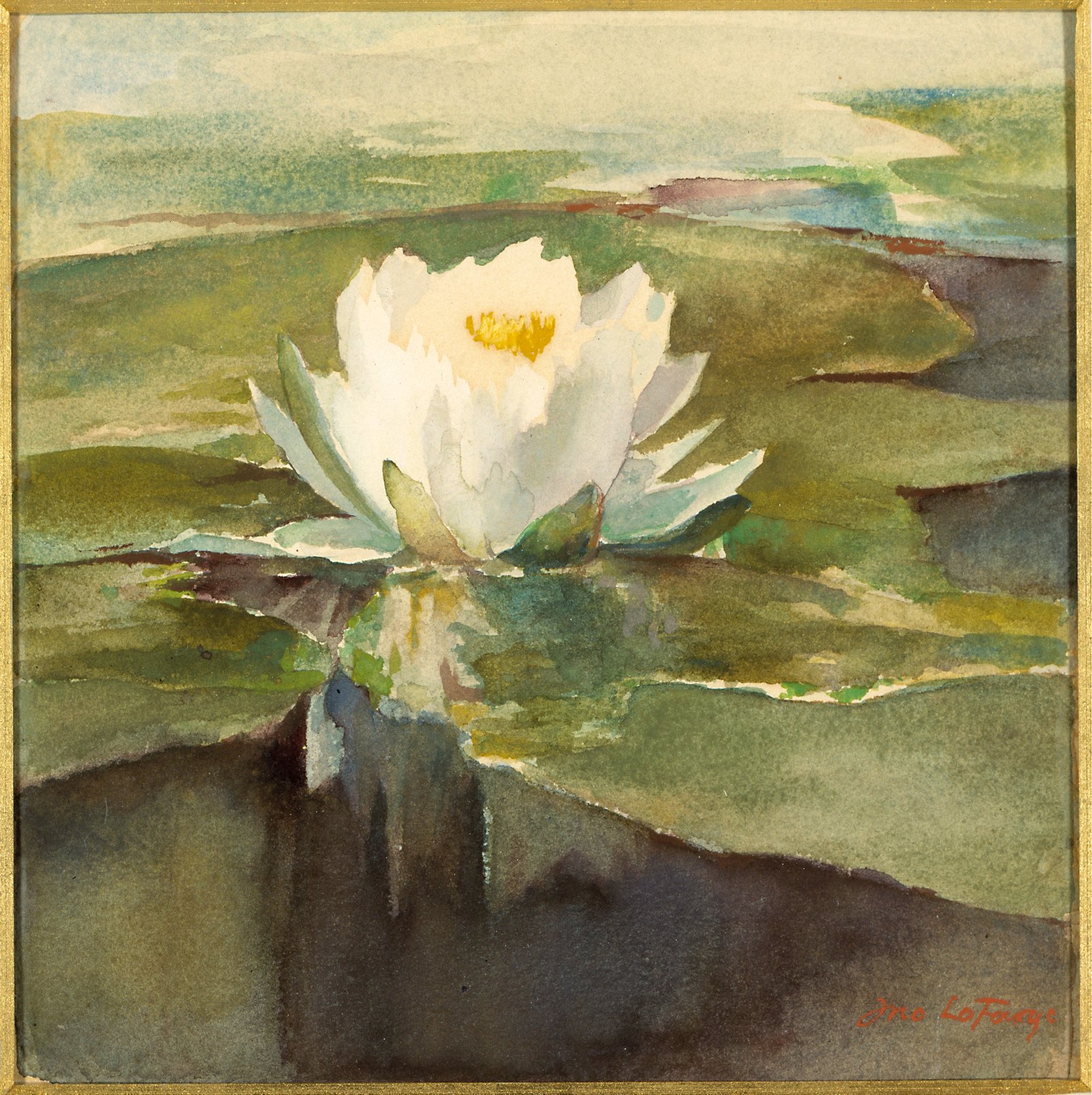
John La Farge, Water Lily in Sunlight, ca. 1883, watercolor on paper, sheet: 8 1/4 x 8 1/4 in. (21.0 x 20.8 cm), Smithsonian American Art Museum, Gift of John Gellatly, 1929.6.70
Winslow Homer (American, 1836–1910). Maine Cliffs, 1883. Watercolor over charcoal on cream, thick, rough-textured wove paper, 13 3/8 x 19 3/16in. (34 x 48.7cm) Frame: 24 x 30 x 1 1/2 in. (61 x 76.2 x 3.8 cm). Brooklyn Museum, Bequest of Sidney B. Curtis in memory of S.W. Curtis, 50.184. (Photo: Brooklyn Museum)

For today’s watercolorist, cherry blossoms are a masterclass in restraint. The temptation is to paint every petal — and that way lies overwork and mud. The Japanese approach suggests the opposite: establish your darks first, reserve your lights, and let the white of the paper carry the luminosity of the blooms. A few well-placed strokes of pale quinacridone pink against a soft gray-blue sky can say more than a hundred carefully rendered petals.
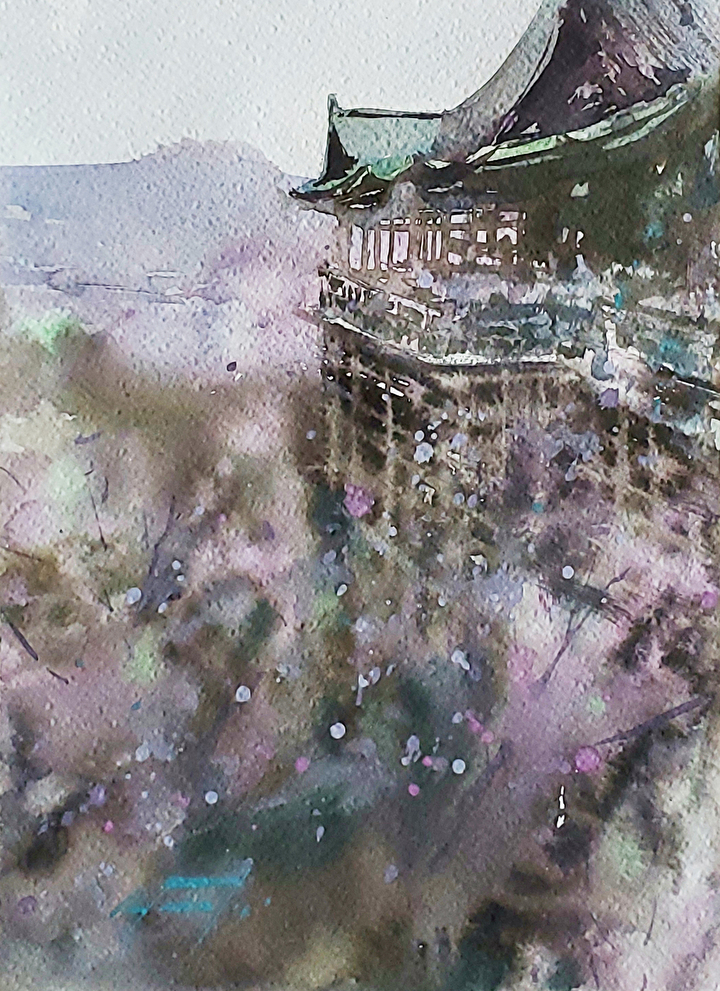
“Vernal Interlude” (2011, watercolor on paper, 12 x 9 in.) by Keiko Tanabe

The blossoms are brief. So is the window for painting them well. 

Ready to experience Japan in person? Fine Art Connoisseur magazine is making it easy with their Art Capitals & Timeless Traditions trip October 22–November 2, 2026.


Previous articleShe Made Color Make Sense
Kelly Kane
PleinAir Magazine and American Watercolor Weekly Editor-in-Chief With more than 20 years experience in art publishing, Kelly Kane has served previously as Editor-in-Chief of Watercolor Artist magazine and Content Director for The Artist’s Magazine, Drawing, Acrylic Artist, and Pastel Journal. She has interviewed many of the preeminent artists of our time and written numerous articles about painting, drawing, art education and art history. She is now the Editor-in-Chief of PleinAir Magazine and the American Watercolor Weekly newsletter. Click here to send her an email.

LEAVE A REPLY

Please enter your comment!
Please enter your name here