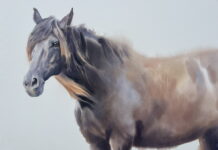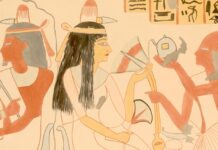

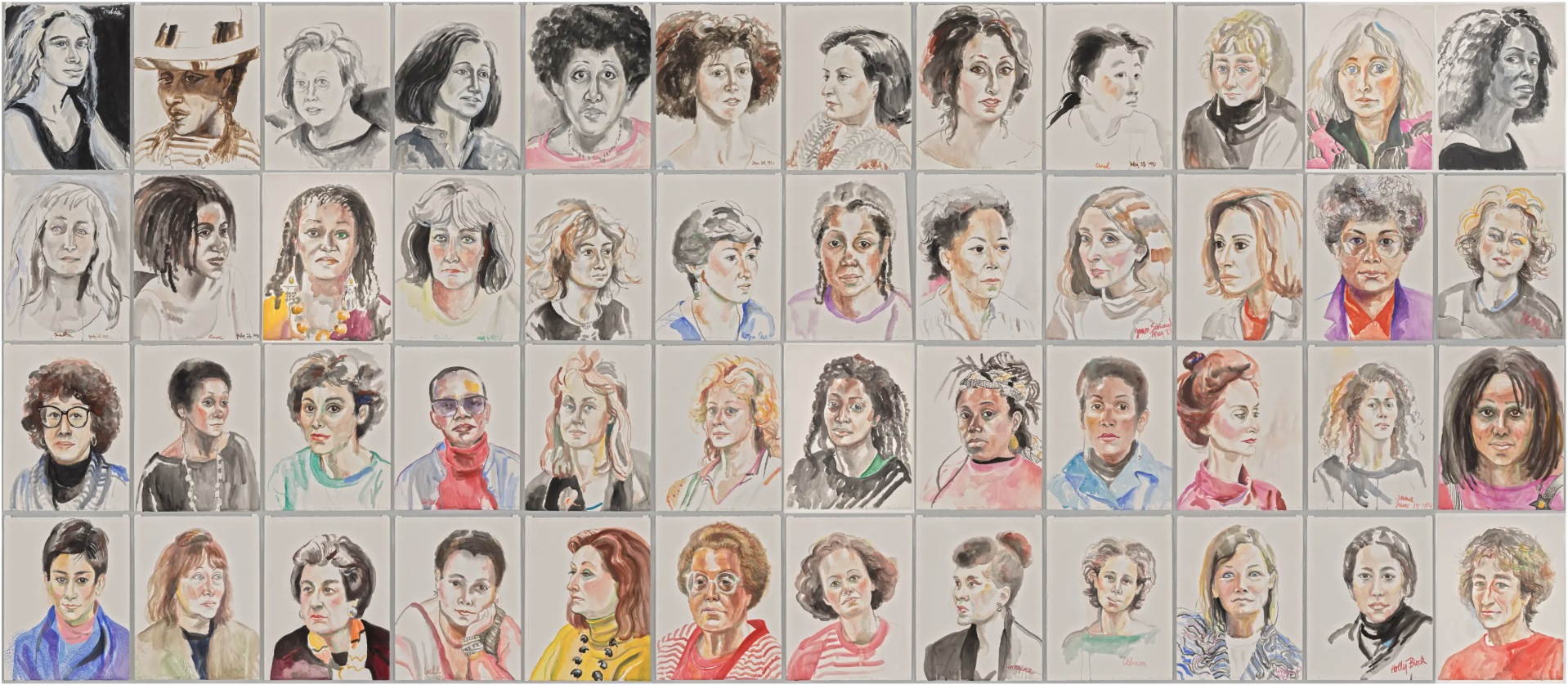
Between 1990 and 1994, Emma Amos’s studio became a gathering place. One by one, women from her intergenerational circle of artists, writers, and curators sat for her — 45 minutes to an hour at a time — while Amos worked in watercolor, a medium she rarely used. Elizabeth Catlett, Faith Ringgold, bell hooks, Lorna Simpson, Anna Deavere Smith: some of the 48 women who appear in the resulting series, The Gift, were already well known. Others weren’t. All of them mattered to Amos, and all of them, in her account, spent their sitting time doing something closer to talking with a friend than posing for a portrait.
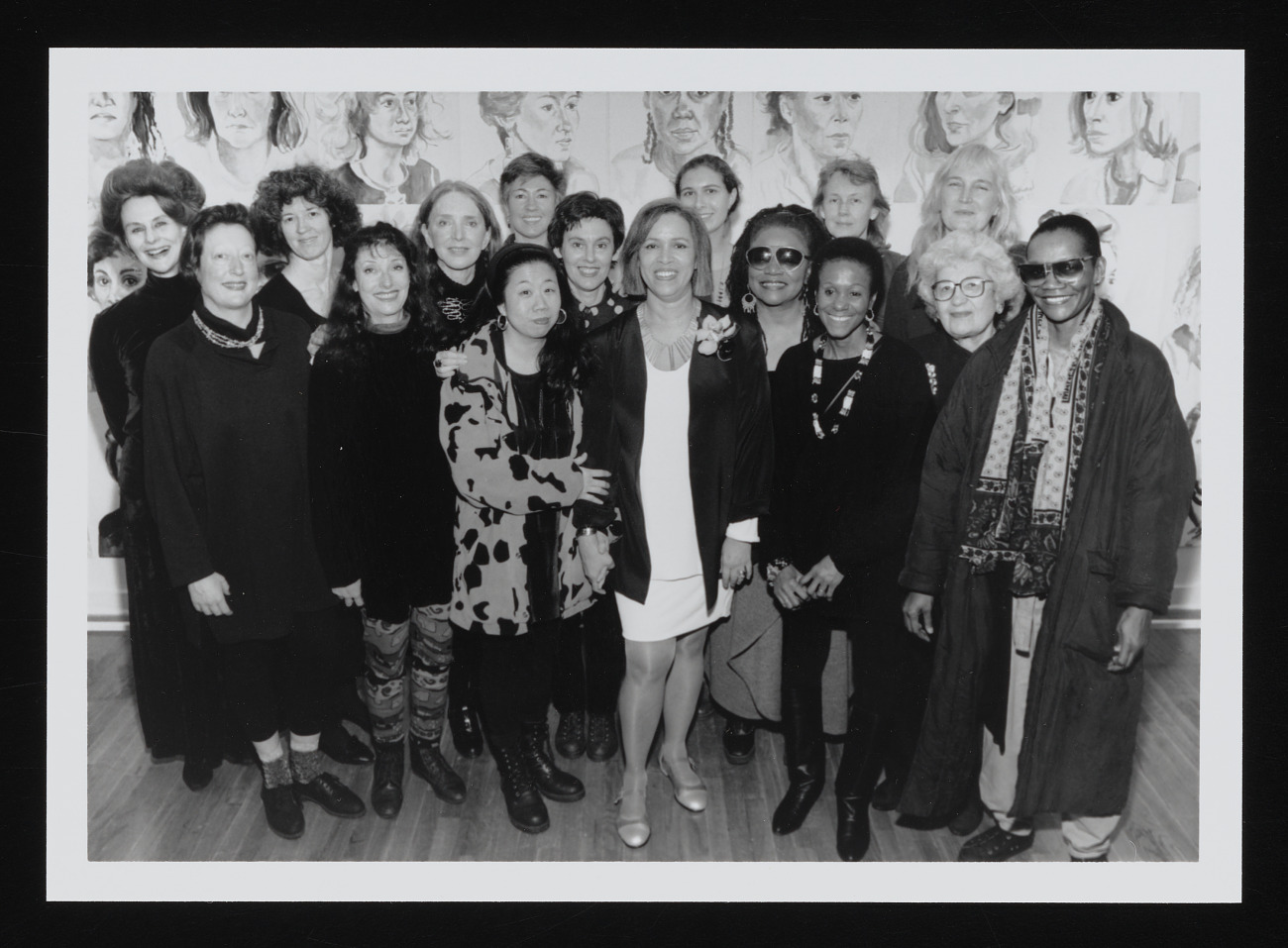
“The sitter and I would discuss juggling jobs and careers, art making, success, having or not having babies, and the effect of jobs, boyfriends, girlfriends, college, and other choices on children as they grow to adulthood,” Amos said of the process. That conversational intimacy is part of what makes watercolor such a fitting choice for the series — a fast, responsive medium suited to capturing something alive and unrepeatable in each encounter, rather than a fixed, formal likeness.
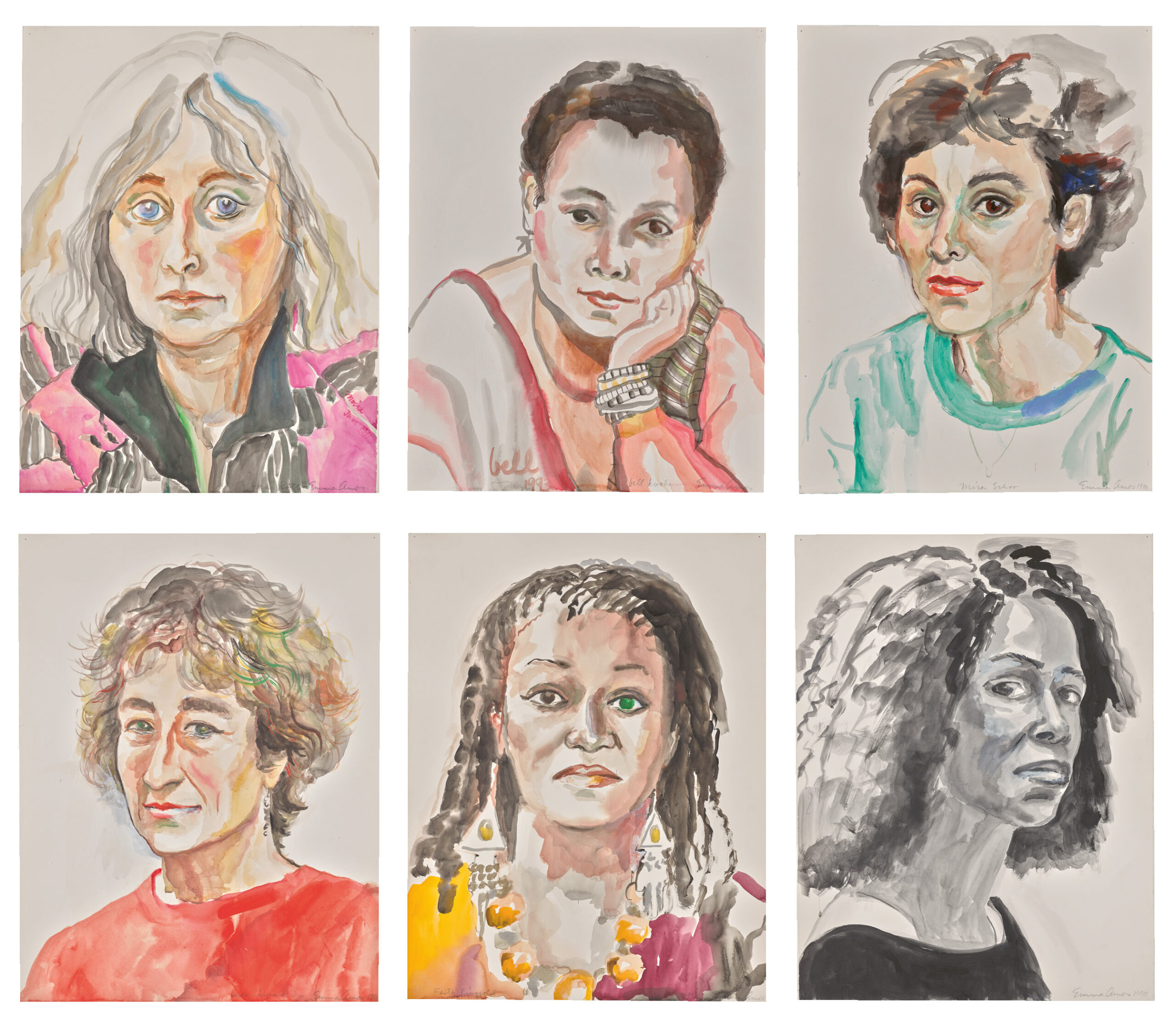
Amos made The Gift as a birthday present for her daughter, India, and included portraits of both herself and India within the larger grid — a way of marking their own place inside the creative community the series documents. The completed work reads less as 48 individual portraits than as a single, unified statement about the force of collective female friendship. “The Gift is not possible to negate,” Amos said. “Those women are too powerful to ignore.”
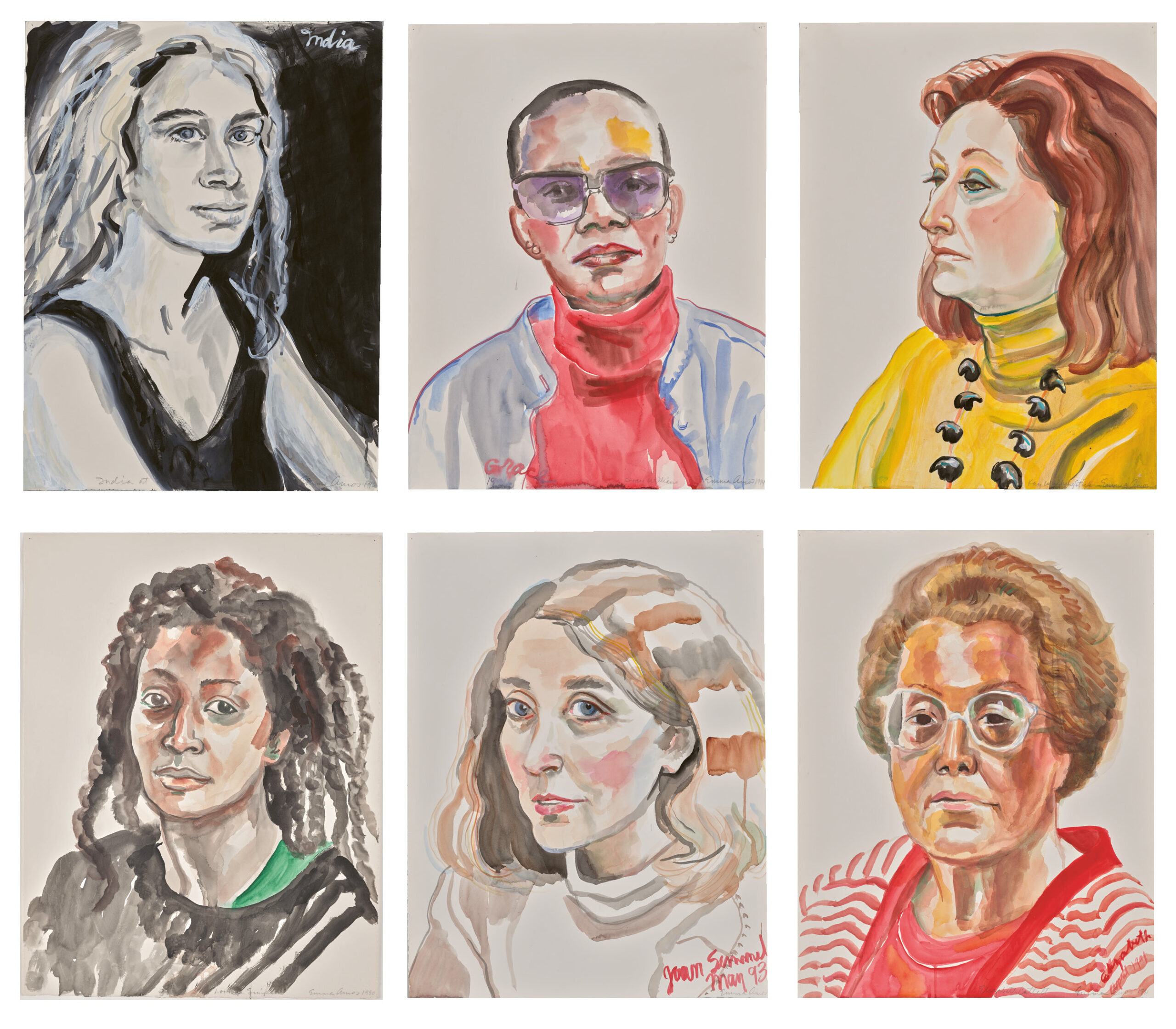
That sense of scale and unity is central to how the piece is meant to be seen. Arranged together, the 48 watercolors radiate a kind of visual and emotional weight no single portrait could carry alone — kinship rendered not as a sentiment, but as a structure you can stand in front of and feel.
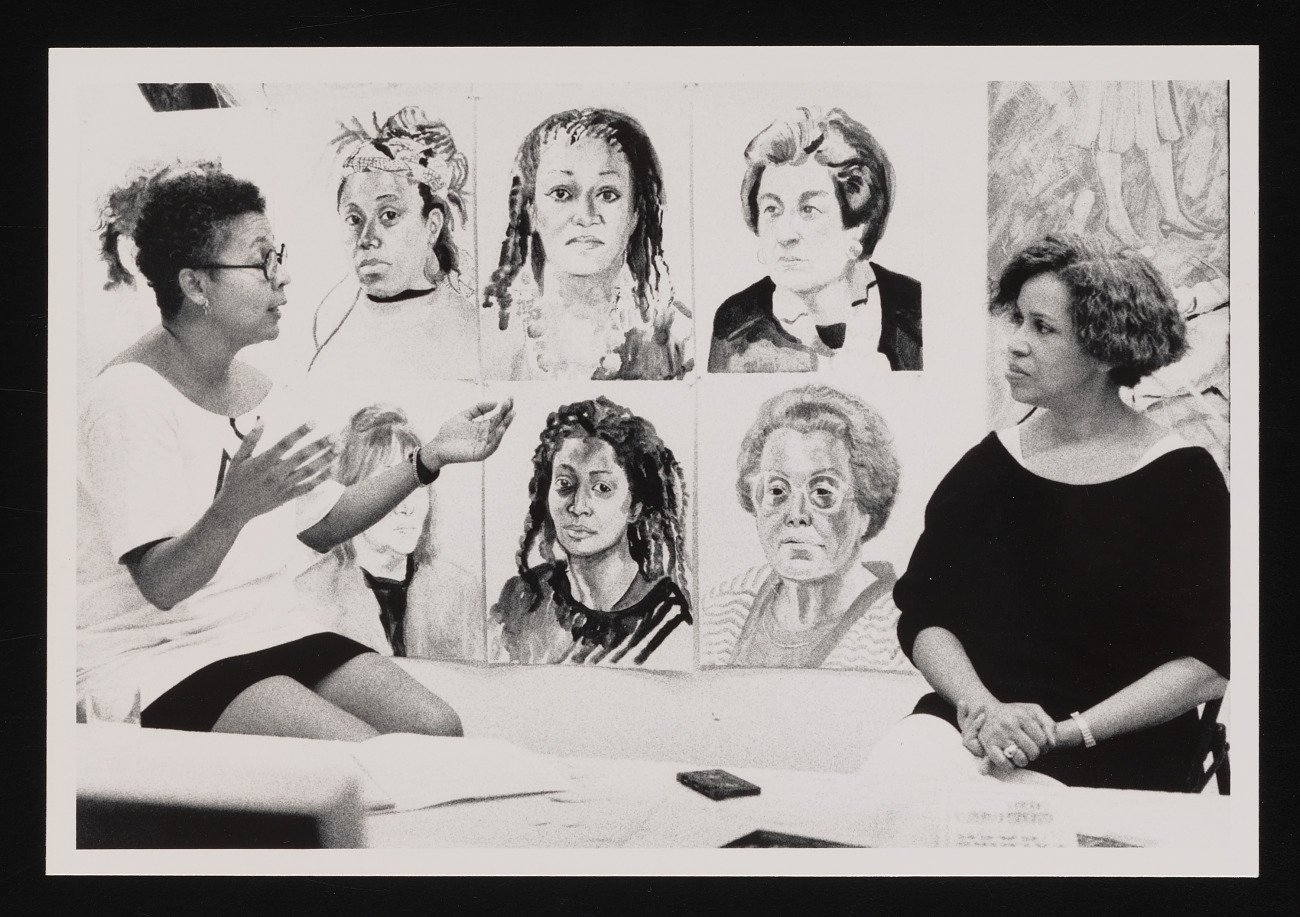
The Gift hasn’t been exhibited in its entirety since 2013. This fall, it returns to view at the Cleveland Museum of Art in a new exhibition, The Gift: Emma Amos with Friends, alongside earlier portraits by Amos, her notebooks and manuscripts, and film footage documenting the series’ creation — material that traces kinship, both biological and chosen, as one of the enduring engines of her work. The exhibition runs through January 24, 2027, free of charge.