
They have been waiting in the archives for over a century. Last month, they finally went on view.
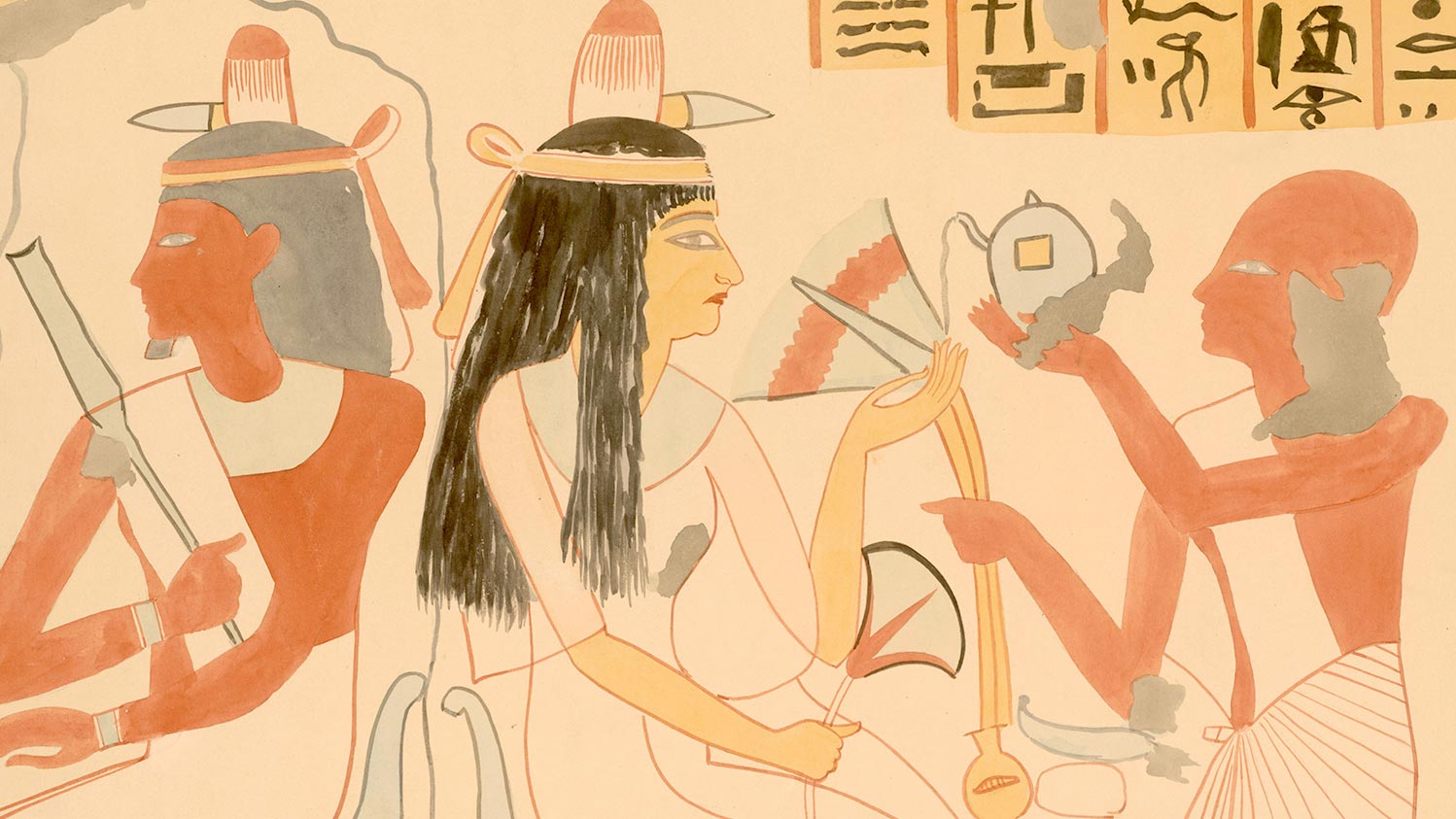
Through October, the Penn Museum in Philadelphia will display a remarkable collection of watercolor paintings by Egyptian artist Ahmed Yousef — works commissioned during a 1921-1923 archaeological excavation at Dra Abu el-Naga, one of ancient Egypt’s most significant burial sites. Last exhibited in Cairo in the 1920s, the paintings have never been shown in the United States.
But this is more than an archaeology story. It’s a story about what watercolor can do that nothing else can.
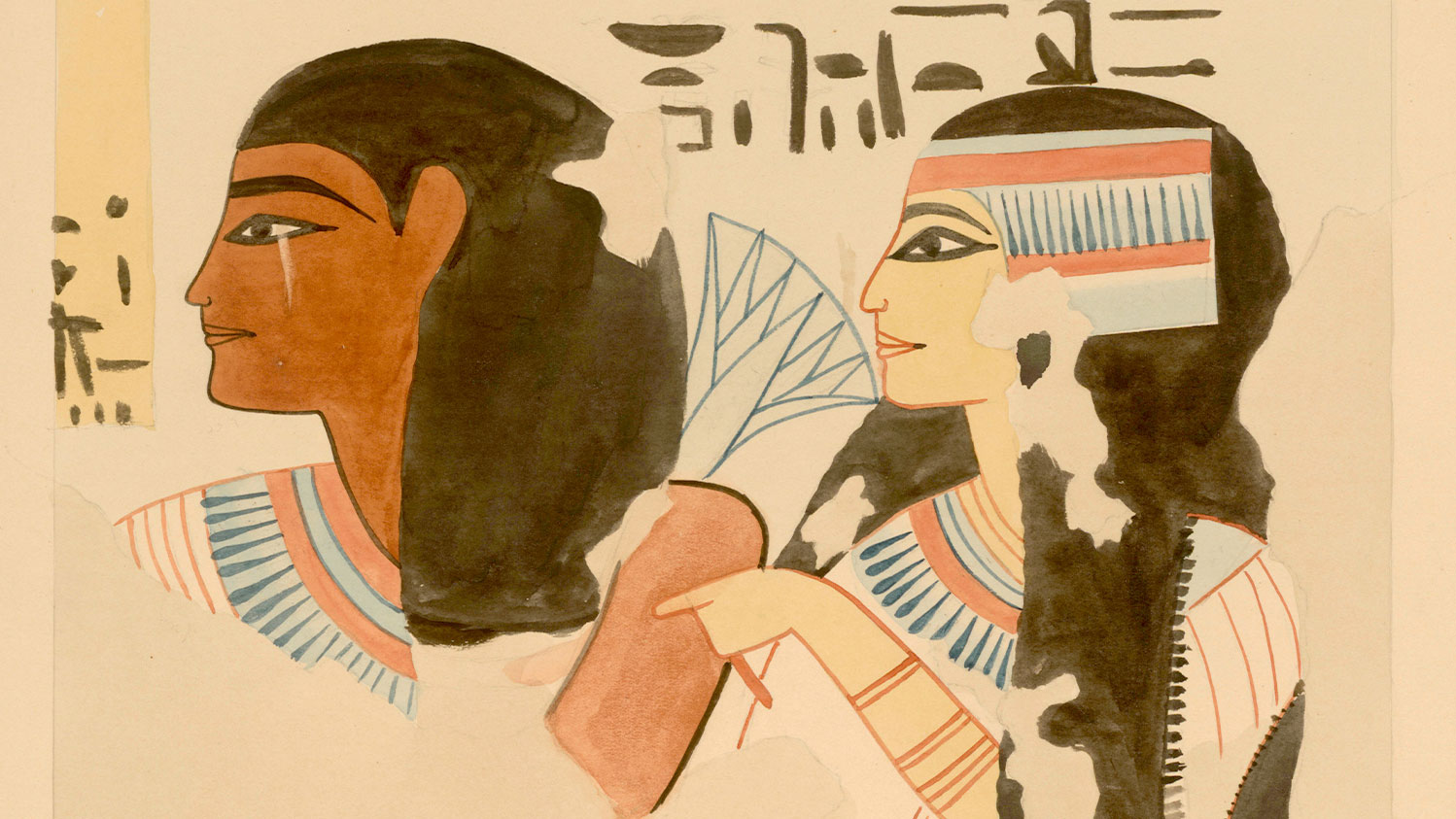
Yousef was a gifted young artist among the 200 local workmen who assisted Penn Museum archaeologist Clarence Fisher during the excavation. Tasked with documenting elaborately decorated tomb chapels from Egypt’s New Kingdom — a golden age dating roughly from 1550 to 1070 BCE — he produced watercolor copies of tomb paintings depicting scenes from everyday life and the journey to the afterlife. The works are, as lead curator Dr. Josef Wegner puts it, “artworks in their own right.”
Their value has only deepened with time. Some of the original tombs have since deteriorated beyond recognition, their interior paintings lost to the elements. For at least one tomb — belonging to the Doorkeeper of Amun, Irdjanen, and his wife — Yousef’s watercolors and Fisher’s archival photographs are the only documentation that still exists. The paintings didn’t just capture history. They preserved it.
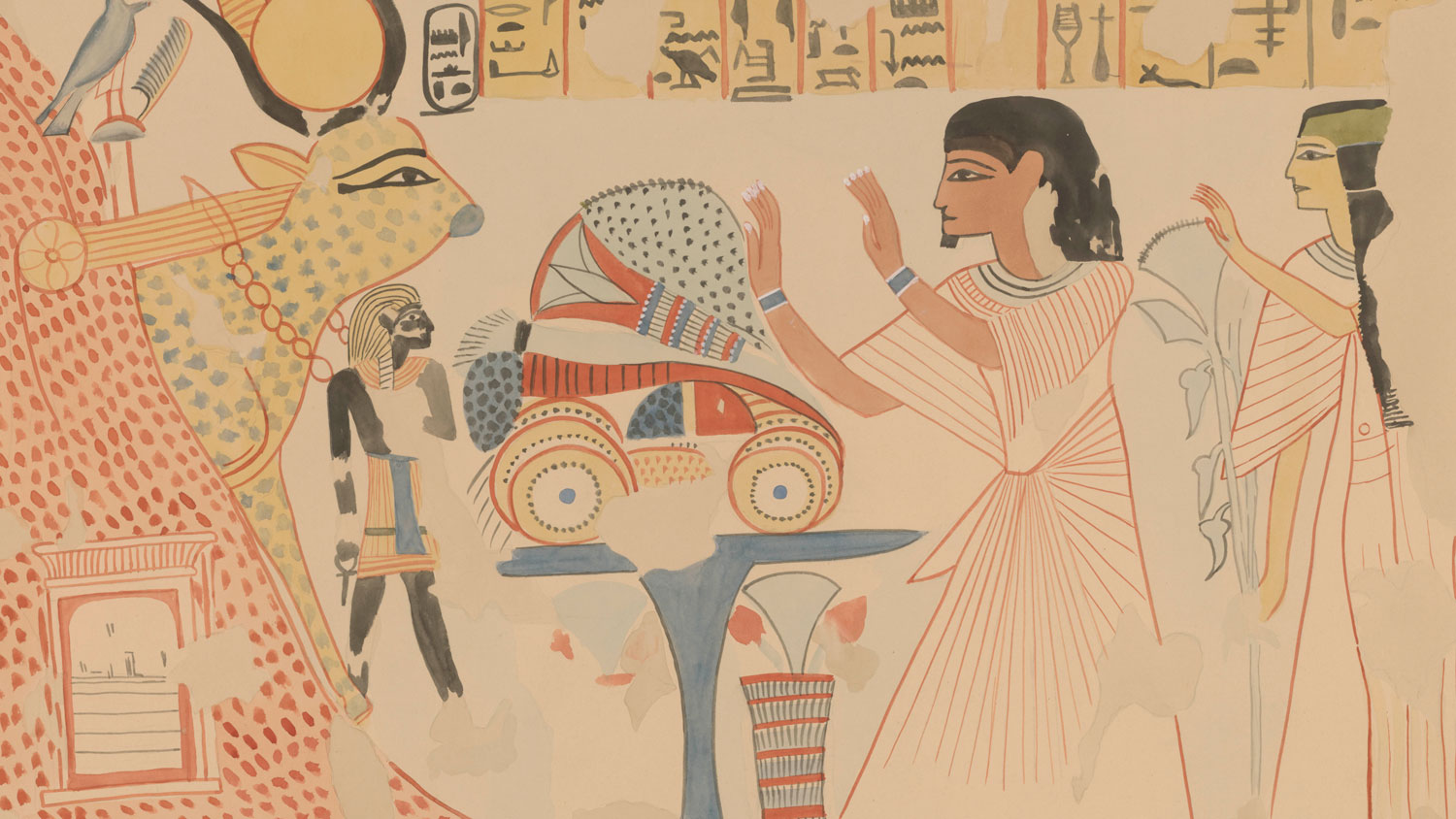
The exhibition pairs 60 rarely seen artifacts — including 3,500-year-old bread loaves, funerary stelae, and canopic jars — with two rotating groups of watercolor paintings on view through October.
Ancient Egypt in Watercolors runs through October 2026 at the Penn Museum in Philadelphia.