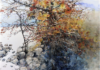


Plein air painting remains a niche activity in Belgium, practiced by only a small number of seasoned artists. Rarely do you come across a painter at their easel, so when passersby see me set up in an urban environment, it often sparks curiosity.
As a professional, I prefer to practice my art in solitude, where I can avoid constraints that might affect my concentration. Occasionally, however, I take part in plein air events outside of Belgium, particularly in Italy, France, and the Netherlands. With very few large-scale festivals that support outdoor painting in my own country, these experiences offer me an opportunity to enrich my artistic practice.

I also frequently paint in Morocco, where I was born, as the light there is exceptional. Wherever I am painting on location, my process for choosing a subject is an emotional one that I do not control. Rather, I would say the subject chooses me, triggering an impression and a vision within me. It is this fleeting vision that becomes the epicenter of my painting. It will define the design of my work, and everything else will become peripheral, serving only to clarify and enhance my vision. Anything that risks compromising it should be eliminated. When I paint en plein air, I feel a sense of urgency because I understand that my vision is fleeting and could vanish at any moment.

For me, only direct contact with a subject evokes the emotion that manifests as a vision, but under certain conditions it’s difficult to paint outdoors. Therefore, it becomes necessary and complementary to alternate between plein air painting and studio work.
When I have time en plein air and the conditions are favorable, I prefer to complete my work on location, only leaving room for small corrections and final touches in the studio. Other times, I create preliminary sketches to capture my first impression, and with the help of photos and notes, I later finish the piece in the studio. In either case, I must work while the vision remains vivid.

Painting en plein air requires you to engage all five senses. As an actor within a dynamic environment, you impart a unique energy and freshness to your work. Forced to paint under pressure, you shed unnecessary details, conveying an immediate emotion and impression. I tell my students that they should strive to express and enhance the essence of a place, rather than the place itself.

In general, my plein air works appeal to a much broader and more diverse audience than my studio pieces, selling more easily due to their format and price. Buyers tend to appreciate their authentic and spontaneous character. Because each plein air painting marks a unique moment in my life, I have an intimate relationship with each of them, often making it difficult for me to part with a painting.
In Cityscapes in Watercolor, Dan Marshall echoes the philosophy that the painting leads the artist, demonstrating how watercolor’s unpredictable nature can become a powerful tool for creating atmosphere in your paintings.